Why comms around change is failing the modern workforce, and how visual communication cuts through
Author: Claudi Schneider
As the pace and volume of organisational change increases, many employees don’t feel that change is clearly communicated. This builds distrust, uncertainty and reduces the sense of purpose and belonging people need to thrive in their working environment.
This week’s 2026 IC Index report shows that only 49% of 5,000 UK employees agree that reasons for change are communicated clearly.
Whether change is driven by growth ambitions, cost pressures, customer needs or operational improvement, honest and jargon-free communication isn’t a nice to have. It’s what makes change land.
Layer this with another nugget from the research that the majority of employees typically have less than 10 minutes a day to scan/read/engage with organisational communications and we have a big challenge.
The answer isn’t to communicate more – more frequently, more clearly, more insistently. That just creates confusion and more noise.
In a recent channel audit with one of our clients, we found that employees were receiving information from 13 different communication channels – with only two of those coming from group communications. That’s not a communication strategy; that’s a daily obstacle course.
Every channel switch, every context shift, every pivot from task to tool to message consumes mental energy. So, by the time an employee finally opens a lengthy internal update, their attention is already scattered, pulled in a dozen different directions before they’ve read a single word.
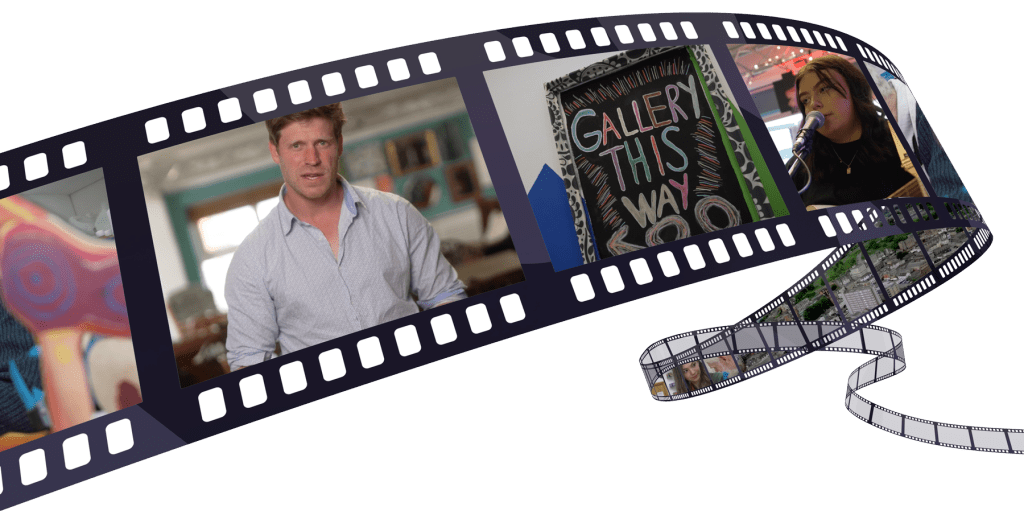
This is precisely where video and animation can really have an impact, not as a trend borrowed from social media, but as a genuine response to communicating change and vital organisational information.
Unlike written communications that require readers to fully focus, video and animation quickly provide framing, context and meaning in a single experience. They don’t compete for attention, they guide it.
Video and animation work because they:
Reduce ambiguity and misinterpretation
Help employees understand priorities without wading through layers of text
Compress complexity into something people can absorb quickly and actually remember.
They’re not a replacement for deeper written communications; they’re the thing that ensures your messaging doesn’t get lost in the scroll. Visual-first communications work because they reduce the mental effort required to understand a message. They do the heavy lifting so your audience doesn’t have to.
There are moments in organisational life when clarity and connection matter most, when the stakes are too high for a message to be misread, misunderstood, or missed entirely.
In our work with clients we’re helping them use visual communication to:
- Explain change and complex messaging – help people understand not just what is changing, but why and their role in this plan
- Align teams around priorities – give everyone the same reference point, at the same time
- Build understanding quickly – especially across large, distributed, or diverse teams
- Reduce ambiguity – leave less room for misinterpretation
- Drive behaviour – move people from awareness to action
- Create emotional connection – remind employees they’re part of something meaningful.
These aren’t nice to have communications. These are the comms that inform and contribute to how employees feel about the organisation they work for.
Want a quick chat about how you can cut through comm noise with relevant and impactful video and animation? Contact claudi.schneider@sequelgroup.co.uk.